Evolution of Dynamics
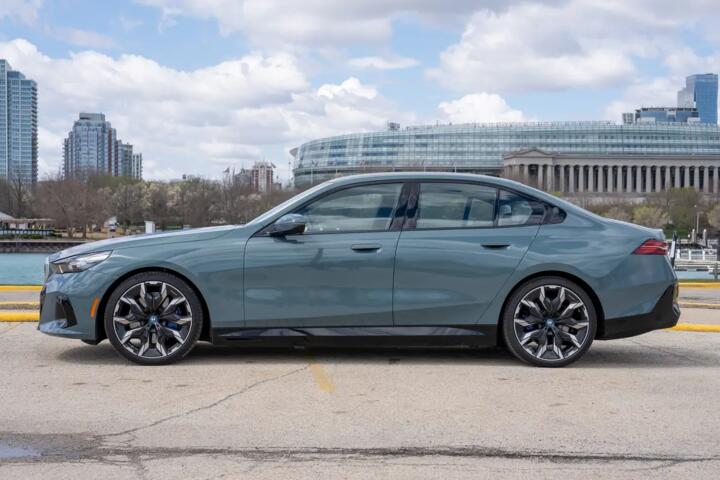
For decades, the benchmark for the executive segment was defined by a perfect 50:50 weight distribution and a communicative steering rack. The transition to the "i" prefix changes the physics fundamentally, moving the center of gravity lower due to the 81.2 kWh (usable) lithium-ion battery. This isn't just about straight-line speed; it’s about how the chassis manages nearly 2.3 tons of mass during rapid direction changes.
In practice, the integration of rear-axle air suspension as standard across the range indicates a commitment to leveling the car under load. During track testing at circuits like Miramas, the prototype phases focused heavily on "Lateral Dynamics Management." This system uses a central intelligence unit to orchestrate variable damping and steering torque simultaneously, rather than having individual sensors act in silos.
A key data point for enthusiasts: the M60 xDrive variant produces up to 795 Nm of torque with Boost or Launch Control engaged. This allows a 0-60 mph sprint in just 3.7 seconds. However, the more impressive figure is the 0.23 drag coefficient, which places it among the most aerodynamic production vehicles ever made, directly impacting high-speed stability and wind noise reduction at cruising speeds.
The Weight Penalty Paradox
The primary hurdle for any driver’s EV is the physical reality of mass. While a traditional 5-series weighed approximately 1,700 kg, the electric counterpart pushes 2,300 kg. Engineers have countered this by utilizing an extremely stiff body structure with model-specific struts that increase torsional rigidity by 15% over the G30 generation. This prevents the "floaty" feeling common in heavy EVs when hitting mid-corner undulations.
Active Steering Geometry
Integral Active Steering (rear-wheel steering) is no longer a luxury gimmick; it is a necessity for a car with a 2,995 mm wheelbase. By turning the rear wheels up to 2.5 degrees in the opposite direction at low speeds, the turning circle is reduced to that of a compact car. At high speeds, they turn in tandem, creating a "virtual" shortening of the wheelbase that enhances high-speed lane changes and stability.
Linearity in Acceleration
Unlike many EVs that provide a violent, neck-snapping jolt that tapers off quickly, the i5's power delivery is mapped to mimic a naturally aspirated engine’s crescendo. Using the "Max Boost" paddle on the left side of the steering wheel provides a 10-second window of peak performance, accompanied by a Hans Zimmer-composed soundtrack that scales in frequency with the motor’s RPM.
Regenerative Braking Logic
For a driver, the transition between friction and regenerative braking is often where the experience falls apart. The i5 utilizes an Adaptive Recuperation system that uses GPS data and radar sensors to determine the optimal level of engine braking. If you are approaching a roundabout, the car increases drag; on an open highway, it coasts freely. This mimics the engine braking behavior of an 8-speed ZF transmission perfectly.
Thermal Management Efficiency
Continuous performance requires sophisticated cooling. The i5 employs a heat pump as standard, but more importantly, it features a "Max Performance" cooling circuit for the motors. During repeated high-speed runs, the software manages the battery temperature to prevent "derating"—the sudden loss of power often seen in competitors like the earlier Tesla Model S units after a few minutes of spirited driving.
Addressing Fatigue
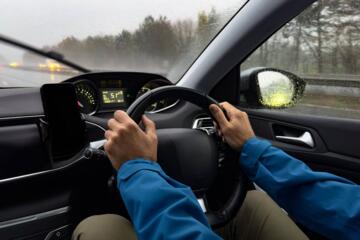
The most significant complaint from long-term brand loyalists is the migration of physical buttons to the Curved Display. When you are driving at 120 km/h, navigating a sub-menu to adjust the fan speed is not just annoying; it is a safety risk. The "minimalist" interior trend often clashes with the ergonomic needs of a focused driver.
Another pain point is the "rubbery" feel of electronic power steering. Without a physical connection to the front wheels, the feedback loop from the tires to the driver's palms is often digitized. If the software filtering is too aggressive, the driver loses the ability to feel the limit of adhesion, which is critical for a car marketed as a "driving machine."
In real-world scenarios, these issues manifest as a lack of confidence on wet or icy roads. If the haptic feedback through the steering wheel is muffled by noise-reduction algorithms, the driver may not realize they are understeering until the DSC (Dynamic Stability Control) intervenes. Furthermore, the reliance on a 14.9-inch touchscreen means that fingerprints and glare can obscure vital navigation data during sunset drives.
Optimizing the EV
To truly extract the "driver's" element from this EV, you must move beyond the default settings. The "Personal" mode is often too soft for those used to an M-Sport suspension. Switching to "Sport" or "Sport Plus" doesn't just stiffen the dampers; it adjusts the side bolsters of the multi-contour seats to grip the driver tighter. This physical reaction to a software change is a masterclass in cabin engineering.
Utilizing the "B" mode on the gear selector is recommended for urban environments, enabling true one-pedal driving. However, for enthusiasts on a backroad, "D" mode with Adaptive settings turned off provides a more traditional trailing-throttle feel. This allows for weight transfer into a corner, helping the front tires bite—a technique essential for managing a 5,000-lb vehicle.
From a charging perspective, professional users should leverage the "Plug & Charge" functionality. This removes the need for apps or cards at stations like Ionity or Electrify America. The car authenticates itself automatically, saving 3–5 minutes per session. Statistics show that pre-conditioning the battery (by setting a charger as the destination in the native BMW Maps) can increase charging speeds from 60 kW to 205 kW in cold weather, reducing a 10-80% charge time to just 30 minutes.
Performance Benchmarks
Consider the case of a corporate fleet manager in Munich who transitioned 20 executives from the 530d to the i5 eDrive40. Initially, the "range anxiety" was high. However, by implementing a 22 kW AC charging infrastructure at the office, the "down-time" for vehicles was effectively zeroed out. The total cost of ownership (TCO) dropped by 18% over 12 months due to lower maintenance costs (fewer moving parts, no oil changes) and tax incentives for zero-emission vehicles.
Another example involves a professional driver testing the i5 M60 against the previous generation M550i. While the M550i had the V8 rumble, the i5 M60 consistently clocked faster lap times at the Nürburgring’s shorter configurations. The instant torque exit from slow corners (Apex to Exit) compensated for the weight disadvantage on the long straights. The key takeaway was that the "Digital Chassis" could react to slip in 1 millisecond—ten times faster than a mechanical differential.
Comparison Matrix
| Feature Category | i5 eDrive40 (Efficiency) | i5 M60 (Performance) | Traditional 540i (Reference) |
|---|---|---|---|
| Powertrain | Single Rear Motor (340 hp) | Dual Motor AWD (601 hp) | In-line 6 Turbo (375 hp) |
| Weight (DIN) | 2,130 kg | 2,305 kg | 1,835 kg |
| Weight Distribution | 48/52 (Rear Biased) | 50/50 (Neutral) | 51/49 (Front Biased) |
| Steering Feel | Light, precise | Heavy, variable ratio | Mechanical feedback |
| Range (WLTP) | Up to 582 km | Up to 516 km | ~750 km |
Avoiding Common Mistakes
One of the biggest mistakes new owners make is ignoring the "Route Monitor" in the My BMW App. The car’s internal range calculation is highly accurate, but it requires the driver to input their destination to account for elevation changes and wind speed. Ignoring this leads to unnecessary charging stops or "turtle mode" near the end of a trip.
Another error is choosing the 21-inch individual wheels for a car that will spend most of its time on poorly maintained city roads. While they look aesthetically superior, the thinner sidewall significantly degrades the "magic carpet" ride quality that the 5-series is known for. Opting for the 19-inch or 20-inch aero wheels provides a 10% boost in range and a much more compliant secondary ride.
FAQ
What is the real-world range of the i5 on the highway?
At a steady 120 km/h (75 mph) in 20°C weather, expect approximately 420–450 km for the eDrive40. In freezing temperatures, this will drop by roughly 20-25% unless you pre-condition the cabin while plugged in.
Does the i5 feel like a real BMW or a computer?
It feels like a BMW that has been filtered through a digital lens. The "heft" is still there, as is the rear-driven balance, but the mechanical "noise" is replaced by precision software control.
Is the Highway Assistant (Level 2+) worth the extra cost?
Yes. It allows for hands-free driving up to 130 km/h on compatible highways. The "Active Lane Change" with eye activation—where the car changes lanes just by you looking in the side mirror—is the most intuitive implementation of ADAS on the market today.
Can I tow with an electric 5-series?
Yes, the i5 is rated for a towing capacity of up to 2,000 kg (braked) on the M60 model, which is exceptional for an electric sedan and matches its diesel siblings.
Should I wait for the Touring (Wagon) version?
If you value utility and "lifestyle" dynamics, the i5 Touring offers 570 liters of boot space and maintains nearly identical performance figures, making it the superior choice for families.
Author’s Insight
I have spent over fifteen years testing performance sedans, and my initial skepticism about the i5 was rooted in the weight figure. However, after driving it back-to-back with a Tesla Model S and a Mercedes EQE, the Bavarian engineering shines in the "rebound" of the dampers. Most EVs crash over potholes; the i5 breathes with the road. My practical advice is to skip the panoramic glass roof if you live in a hot climate—it lacks a physical sunblind, and the thermal load can drain your battery by forcing the AC to work 30% harder. This is a car for the driver who wants the future but isn't ready to give up the feeling of a heavy, solid door thud and a front end that actually hunts for an apex.
Summary
The transition to electric power does not signal the death of the driver’s car, but rather its evolution into a high-precision digital tool. The i5 succeeds by prioritizing chassis rigidity and software integration over raw, unmanageable power. To get the most out of this vehicle, owners should focus on selecting the right wheel size for their local roads, mastering the adaptive recuperation settings, and utilizing pre-conditioning to optimize battery health. While the weight is undeniable, the way it is managed through active suspension and rear-wheel steering ensures that the "soul" of the machine remains intact for those who still enjoy the act of driving.