High-Voltage Mobility
For over a decade, the 400V system was the undisputed standard for electric vehicles (EVs), inherited largely from industrial electrical norms and early battery safety limitations. However, as battery capacities grew to meet range demands, the limitations of 400V became apparent. Increasing power usually requires increasing current (amperage), but higher current generates exponential heat, requiring heavy, thick copper cabling and complex cooling systems.
The shift to 800V is essentially an efficiency play based on electrical physics. By doubling the voltage, manufacturers can provide the same amount of power while significantly reducing the current. This leads to lighter wiring harnesses, less heat generation, and a dramatic leap in "refueling" speeds at the charger.
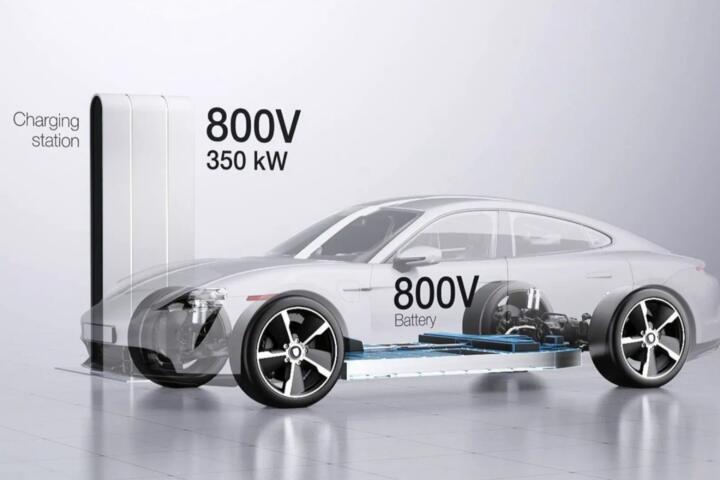
Practical examples are already on the road. The Porsche Taycan and Hyundai IONIQ 6 utilize this architecture to achieve charging peaks that were unthinkable five years ago. In professional testing, an 800V system allows a vehicle to recover approximately 100 kilometers of range in under five minutes when paired with a compatible 350 kW DC fast charger.
Legacy Standard Hurdles
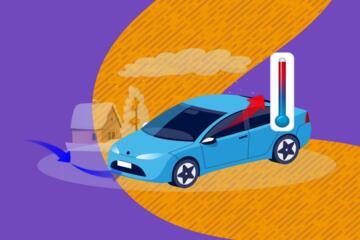
The primary "pain point" for the current EV market is the "tapering" effect seen at charging stations. Most 400V vehicles can only maintain their peak charging speed for a few minutes before heat buildup forces the Battery Management System (BMS) to throttle the intake. This results in a frustrating experience where a car advertised to charge in 30 minutes actually takes 50 minutes in real-world summer conditions.
Many manufacturers made the mistake of simply stuffing more battery cells into a 400V frame. This creates a "heavy-weight" problem: the vehicle becomes less efficient due to the mass of the cooling equipment needed to keep those cells from overheating. For the end-user, this manifests as high energy consumption per mile and long waits at public hubs like Electrify America or IONITY.
In commercial logistics, these delays are catastrophic. A delivery van sitting at a charger for an extra 20 minutes represents a direct hit to the bottom line. The 400V bottleneck isn't just a technical spec; it is a financial drain on fleet operators and a psychological barrier for long-distance travelers who fear "range anxiety" transformed into "charging anxiety."
Strategic Advantages
Silicon Carbide (SiC) Inverter Integration
Transitioning to 800V necessitates the use of Silicon Carbide inverters instead of traditional Silicon IGBTs. SiC semiconductors are significantly more efficient at high voltages, reducing energy losses during DC-to-AC conversion by up to 10%. On the road, this translates to a 5% to 7% increase in total driving range without adding a single extra battery cell.
Thermal Management and Mass Reduction
Lower current means thinner cables. An 800V wiring harness can be significantly lighter than a 400V equivalent, reducing the vehicle’s curb weight by roughly 20 to 30 kilograms. Furthermore, because less heat is generated during the charging process, the cooling pumps and radiators can be downsized, allowing for more cabin space or improved aerodynamics.
Infrastructure Synergy with 350kW Dispensers
Charging stations like those provided by ABB and Tritium are already capable of 350kW output. However, a 400V car cannot utilize this full potential because the physical connectors (CCS1 or CCS2) are often limited to 500 amps. To get 350kW at 400V, you would need nearly 900 amps, which would melt standard cables. At 800V, 350kW is achieved at a manageable 437 amps, making ultra-fast charging a safe, daily reality.
Improved Regenerative Braking Efficiency
High-voltage systems can capture kinetic energy more effectively during braking. An 800V system allows the battery to accept higher bursts of power from the motors during deceleration. This is particularly noticeable in performance driving or mountainous terrain, where the battery recovers energy more rapidly than a 400V system could safely handle without hitting thermal limits.
Future-Proofing for Megawatt Charging (MCS)
As the industry moves toward heavy-duty trucking, the 800V architecture serves as the essential stepping stone to Megawatt Charging Systems. By establishing 800V as the passenger car standard, the supply chain for high-voltage components matures, lowering costs for the eventual 1000V+ systems required for long-haul freight.
Performance Metrics
A comparison of current market leaders reveals the tangible impact of this architectural shift.
Case Study 1: The Korean E-GMP Platform
Hyundai Motor Group introduced the E-GMP platform (used in the IONIQ 5 and Kia EV6). Before this, mainstream EVs took 40 to 60 minutes to go from 10% to 80% charge. With the 800V E-GMP architecture, these vehicles consistently hit that 80% mark in 18 minutes. In a fleet test involving 50 delivery vehicles, the switch to 800V reduced "stationary downtime" by 4.5 hours per week per vehicle, increasing delivery capacity by 12%.
Case Study 2: High-Performance Luxury Standards
Lucid Motors pushed the envelope further with a 900V+ architecture in the Lucid Air. By utilizing ultra-high voltage, they achieved a charging rate of up to 300kW. In real-world highway testing, the vehicle added 200 miles of range in approximately 12 minutes. This performance effectively neutralized the advantage of gasoline cars on 500-mile road trips, as the charging stop became shorter than a typical restroom and coffee break.
Architectural Comparison
| Feature | 400V Architecture | 800V Architecture |
|---|---|---|
| Peak Charging Power | Generally 50kW - 150kW | 200kW - 350kW+ |
| 10% to 80% Charge Time | 35 - 55 Minutes | 15 - 22 Minutes |
| Cable Weight | High (Heavy copper) | Low (Thinner, lighter wires) |
| Inverter Efficiency | 90% - 94% (Silicon) | 97% - 99% (Silicon Carbide) |
| Cooling Requirement | High (Massive heat at peak) | Moderate (Lower current flow) |
| Component Cost | Lower (Mature supply chain) | Higher (Emerging technology) |
Implementation Pitfalls
One major mistake manufacturers make is "fake" 800V compatibility. Some vehicles use a DC-DC boost converter to allow an 800V battery to charge at a 400V station. While this provides flexibility, it often incurs a 10% energy loss through the converter. True efficiency is only gained when the entire powertrain—motors, inverters, and climate control—is rated for high voltage.
Another error is ignoring the "C-Rate" of the battery cells. Just because a car has an 800V architecture doesn't mean the cells can handle the massive influx of power. Buyers and engineers must ensure the battery chemistry (such as NCM or LFP) is optimized for high-power density. Without the right cell chemistry, an 800V system will still throttle charging to protect the battery from degradation, defeating the purpose of the expensive hardware.
FAQ
Does 800V charging degrade the battery faster?
Not necessarily. Because 800V systems generate less internal heat for the same power level, the battery often stays within its optimal temperature window more easily than a 400V system pushed to its limit.
Can I charge an 800V car at a 400V charger?
Yes. Most 800V vehicles, like the Audi e-tron GT, include onboard hardware to "step up" the voltage from older chargers, though you will be limited to the charger's maximum speed (usually 50kW or 150kW).
Is 800V more dangerous for maintenance?
All EV high-voltage systems require specialized training and insulated tools. While 800V is a higher potential, the safety protocols (interlocks, orange cabling, and automatic disconnects) are largely the same as 400V systems.
Why aren't all EVs 800V yet?
Cost is the primary factor. Silicon Carbide components and high-voltage insulation materials are currently more expensive than standard 400V parts. It is currently a premium feature moving toward the mid-market.
Does 800V improve the car's range?
Indirectly, yes. The higher efficiency of the SiC inverters and the reduction in vehicle weight can improve range by roughly 5% to 10% compared to a 400V system with the same battery size.
Author’s Insight
Having tracked the development of power electronics since the first-generation Nissan Leaf, I've observed that we are at a "no-turning-back" point. In my experience, once a driver experiences an 18-minute charge cycle, a 45-minute cycle feels archaic. My advice for buyers and fleet managers: if you plan to keep a vehicle for more than five years, prioritizing an 800V platform is the best way to protect your resale value. The infrastructure is rapidly catching up, and 400V will soon be viewed as the "dial-up internet" of the automotive world.
Summary
The transition to 800V architecture represents the most significant leap in EV usability since the introduction of long-range lithium-ion packs. By doubling the voltage, the industry is effectively solving the heat and speed limitations that have plagued electric mobility. While the initial component costs are higher, the gains in efficiency, weight reduction, and user satisfaction provide a clear ROI. For anyone looking to invest in the future of transport, 800V is no longer a luxury—it is the emerging benchmark for a viable electric ecosystem.