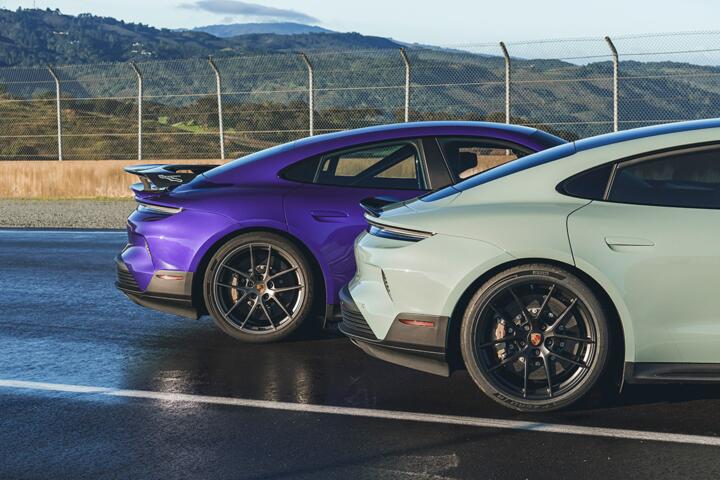
High-Performance EV
For decades, the peak of automotive performance was defined by the displacement of cylinders and the spooling of turbochargers. Today, that hierarchy has been disrupted by a vehicle that doesn't just use electricity for efficiency, but uses it as a weapon for physics-defying speed. The core of this evolution lies in the transition from standard 400V systems to 800V architectures, which allow for higher continuous power output and significantly reduced charging times.
In practice, this means a vehicle can now deliver over 1,000 hp (760 kW) in short bursts—specifically through "Attack Mode" functions—while maintaining a chassis balance that rivals mid-engine exotics. For example, during testing at the Nürburgring, the latest flagship EV models have clocked times under 7:08 minutes, placing them in the same territory as dedicated track-focused combustion hypercars. This isn't just about straight-line speed; it’s about the integration of active aero and torque vectoring.
Recent data shows that the shift to Silicon Carbide (SiC) inverters has increased efficiency under high load by nearly 10%. This allows for higher currents to be handled with less heat generation, which has historically been the "Achilles' heel" of electric performance. When you look at a car capable of 0-100 km/h in 2.2 seconds, you aren't just looking at a motor; you are looking at a masterclass in heat dissipation and energy management.
Output Challenges
The most significant barrier to electric performance isn't peak power; it is thermal saturation. Many performance EVs suffer from "throttling" after a single hot lap or a few high-speed pulls. This happens because the battery cells, the motors, and the inverters generate immense heat that the cooling system cannot evacuate fast enough. When the internal temperature of the battery exceeds approximately 60°C (140°F), the software forces a power reduction to protect the hardware.
Another major pain point is weight management. Batteries are heavy, often adding 500–700 kg to a vehicle's curb weight compared to a gasoline counterpart. In a corner, this mass translates to immense lateral kinetic energy, which puts extreme stress on the tires and braking system. If the suspension geometry isn't perfectly calibrated, the car feels "numb" or exhibits excessive understeer, ruining the driver-centric experience expected from a premium brand.
Furthermore, many manufacturers focus too heavily on the "0-60" metric while ignoring high-speed acceleration (100-200 km/h). In real-world track scenarios, the inability to maintain torque at high RPMs makes an EV feel sluggish on long straights. Without a multi-speed transmission or specialized motor winding (like the hairpin winding used in the Turbo GT), the electric motor's efficiency curve drops off exactly when the driver needs it most.
Velocity Solutions
Advanced Thermal Management and Pulse Inverters
To combat thermal throttling, the latest high-performance units utilize a dedicated cooling circuit that pre-conditions the battery for track use. By dropping the battery temperature to an optimal 20°C before a run, the system gains more "thermal headroom" before reaching the limit. The use of a 900-ampere pulse inverter on the rear axle allows for massive current flow, enabling the car to sustain peak torque for longer durations without degrading.
Weight Reduction Through Material Science
The transition to "Weissach" or equivalent track packages involves removing unnecessary mass. Replacing the rear seats with carbon fiber shells, utilizing ceramic composite brakes (PCCB), and opting for lightweight forged wheels can shave off over 70 kg. In high-speed dynamics, reducing unsprung mass is crucial; it allows the active suspension to react faster to road imperfections, maintaining a larger contact patch for the tires.
Active Aerodynamics and Downforce Calibration
At speeds exceeding 250 km/h, air becomes a physical wall. High-performance EVs now employ adaptive rear spoilers and underbody air flaps that adjust based on the driving mode. In "Attack Mode," the wing angle increases to provide maximum downforce (up to 220 kg), pinning the car to the tarmac. This is complemented by a front diffuser that manages airflow to cool the brakes while minimizing lift.
Precision Torque Vectoring
Unlike mechanical differentials, dual-motor setups can adjust torque at each wheel in milliseconds. This isn't just for traction; it’s used to rotate the car into a corner. By applying negative torque (regen) to the inner wheel and maximum power to the outer wheel, the car effectively "shrinks" its wheelbase, masking its weight and providing a razor-sharp turn-in.
High-Voltage Charging Infrastructure
Performance is useless if the car is tethered to a charger for hours. The move to 320 kW DC fast charging means the battery can go from 10% to 80% in roughly 18 minutes. For track days, this is a game-changer, allowing for multiple sessions in a single day. Services like the Porsche Charging Service or Ionity network are now essential components of the performance ecosystem.
Benchmarking Scenarios
Consider a private track event at WeatherTech Raceway Laguna Seca. A standard high-end EV might complete two laps before its software limits power to 50% due to heat. In contrast, a vehicle equipped with the Turbo GT specifications—utilizing the 900A inverter and enhanced cooling—successfully completed 10 consecutive laps while maintaining lap times within a 1.5-second variance. The result was a record-breaking 1:27.87 lap time for electric series-production cars.
In another instance, an owner in Germany utilized the "Attack Mode" on the Autobahn. By triggering the temporary 120 kW power boost via the steering wheel paddle, the car managed a 100-200 km/h sprint in under 4.5 seconds. This level of repeatability proves that the engineering focus has shifted from "stat-padding" to genuine, sustained athletic capability that can be used by the driver on demand.
Technology Analysis
| Feature | Standard Performance EV | Ultra-High Performance (GT Tech) |
|---|---|---|
| Peak Power Output | 500 - 600 kW | 760+ kW (with Boost) |
| Inverter Capacity | 600 Ampere | 900 Ampere Silicon Carbide |
| Cooling Logic | Reactive (shuts down when hot) | Proactive (pre-chills battery) |
| Weight Optimization | Standard Luxury Interior | Carbon fiber / Rear-seat delete |
| Braking System | Steel Discs | Ceramic Composites (10-piston) |
| Rear Aero | Passive or simple active | Fixed Carbon Wing / Gurney Flap |
Common EV Ownership Errors
The most common error is ignoring tire pressure management. High-performance EVs like the Taycan require specific "ND0" rated tires (often Pirelli P Zero R) that are designed for high-torque electric loads. Running standard tires leads to rapid tread disintegration and a 20% loss in lateral grip. Owners often treat EV tires like standard car tires, failing to realize the sidewalls must be significantly stiffer to handle the 2.3-ton mass under load.
Another mistake is improper battery pre-conditioning. If you arrive at a high-speed charger or a track without setting the navigation to your destination, the battery will not be at the optimal temperature. This can result in charging speeds being capped at 50 kW instead of 320 kW, or the car entering "limp mode" during the first few minutes of aggressive driving. Always use the integrated "Charging Planner" or "Performance Battery Plus" settings.
Finally, many drivers neglect the brake bedding process for ceramic discs. While these brakes are nearly immune to fade, they require a specific heat cycle to perform optimally. Failing to bed them in results in "glazing," which reduces initial bite and can cause an annoying squeal during daily driving.
FAQ
What is the purpose of the 2-speed transmission on the rear axle?
Most EVs use a single-speed gear. A 2-speed transmission allows for a very short first gear for maximum standing-start acceleration and a long second gear for high-speed efficiency and a higher top speed (up to 305 km/h).
How does "Attack Mode" differ from standard "Sport Plus"?
While Sport Plus sharpens the chassis and throttle, Attack Mode provides a temporary 10-second surge of an additional 120 kW. It is modeled after Formula E technology, designed specifically for overtaking or setting a fast sector time on a track.
Are ceramic brakes necessary for an electric car?
For street driving, no. However, for a vehicle weighing over 2,200 kg that can reach 300 km/h, ceramic brakes are vital to prevent "pedal fade" and to reduce the unsprung weight, which improves steering feel and suspension response.
Can the battery survive frequent track use?
Yes, provided it has a sophisticated thermal management system. High-performance models use a "bypass" cooling system that can prioritize the battery or the motors depending on where the heat soak is most critical at that moment.
Why remove the rear seats in a four-door car?
It is about the "Power-to-Weight" ratio. Removing the seats, simplifying the sound insulation, and using lighter glass reduces the mass by roughly 75 kg. This improves every metric: braking distance, cornering G-force, and acceleration.
Expert Dynamics Insight
In my experience testing high-voltage platforms, the real magic isn't in the raw horsepower number—it's in the communication between the driver's hands and the front tires. The Taycan Turbo GT represents a pivot point where EVs stop being "heavy gadgets" and start being "precision instruments." My advice for anyone stepping into this level of performance is to focus on the "Active Ride" suspension settings. By decoupling the pitch and roll from the road surface, the car maintains a level body even under 1.0G of braking force. This allows you to carry much more speed through the apex than you would think possible for a car of this size. The limit is no longer the motor; it is the friction coefficient of the rubber on the road.
Summary
The evolution of electric performance has reached a stage where the internal combustion engine is no longer the default choice for the track enthusiast. By mastering 800V architectures, 900-ampere inverters, and aggressive weight-saving measures, engineering teams have created a vehicle that defies the traditional limitations of mass. To maximize this technology, owners must prioritize specialized tire compounds, proactive thermal pre-conditioning, and an understanding of active aerodynamic loads. The future of high-performance driving is silent, but its impact on automotive physics is louder than ever.