Automotive Sightlines
The traditional rear window has long been a compromised element of car design. As safety regulations mandated thicker C-pillars for rollover protection and consumers demanded more aerodynamic "fastback" silhouettes, the actual field of view in many modern cars shrank to a mere sliver. We are now seeing a pivot where engineers prioritize the roofline’s aerodynamic curve—essential for extending EV range—over a piece of glass that offered poor visibility anyway.
In a traditional setup, the driver’s view is often obstructed by headrests, passengers, or bulky cargo. By removing the glass entirely and moving the rear header rail further back, manufacturers can create a more spacious cabin environment. A prime example is the shift toward a 120-degree wide-angle digital feed, which provides a significantly broader perspective than the standard 20-30 degrees offered by a conventional mirror limited by the car's interior geometry.
Recent data from the automotive tech sector suggests that digital mirrors can reduce drag coefficients by up to 2-3%, a critical margin when every kilowatt-hour counts. For instance, the transition to camera-based monitoring systems in heavy-duty vehicles has already shown a fuel efficiency improvement of nearly 5% in wind tunnel testing.
Blind Innovation Risks
The primary struggle for early adopters isn't just the lack of glass; it’s the physiological adjustment to "digital depth." When a driver looks at a traditional mirror, their eyes focus on a distance far behind the car. With a digital screen, the eyes must refocus on a flat surface just inches away. This can cause eye strain or a split-second delay in cognitive processing during high-speed maneuvers.
Furthermore, many digital systems fail when environmental conditions aren't perfect. Low-end camera sensors often suffer from "blooming" or lens flare when a vehicle behind has high-beam LEDs engaged. In heavy rain or salt-gritted winter conditions, the camera lens can become obscured, leaving the driver functionally blind if the car lacks an integrated cleaning system.
The consequences of a poorly executed digital-only rear view are significant. Drivers may experience a loss of situational awareness, particularly when judging the closing speed of approaching vehicles. If the hardware lacks a high refresh rate (minimum 60Hz), the slight "stutter" in the video feed can disrupt the driver’s spatial orientation, leading to hesitant lane changes and increased accident risks.
Digital Visibility Tips
Implementing a glass-free design requires more than just a camera; it requires a redundant, high-fidelity ecosystem. To ensure safety and performance, manufacturers and aftermarket specialists must focus on sensory parity—making the digital view feel as natural as the physical one.
High-Resolution HDR Sensor Integration
The hardware must utilize a High Dynamic Range (HDR) sensor capable of balancing the glare of headlights at night while maintaining detail in the shadows. Look for systems utilizing Sony’s IMX series sensors or similar automotive-grade chips. These sensors allow for "flicker-free" viewing, ensuring that LED headlights from trailing cars don't appear to strobe on the internal display.
Active Lens Management Systems
A camera is only as good as its clarity. Top-tier implementations feature a dedicated washer nozzle or a hydrophobic coating (like those from Gtechniq) to repel water and grime. Some advanced designs even use a "protective housing" that creates a high-pressure air curtain over the lens to blow away debris before it lands, ensuring the 9.3-inch high-definition screen inside remains crystal clear.
Depth Perception Calibration
To combat the "flat image" issue, the screen should be positioned exactly where the traditional mirror would be, but with an adjustable focal length. Software-driven overlays—similar to those found in parking sensors—can provide "distance markers" on the rear feed. These digital guides help the driver’s brain translate 2D pixels into 3D distance, making lane merging intuitive rather than a guessing game.
Integration with ADAS and LiDAR
The rear-facing camera should not exist in a vacuum. By piping the video feed through the vehicle's Advanced Driver Assistance Systems (ADAS), the screen can highlight potential hazards in red or amber. If a vehicle enters a blind spot that the camera might miss at the periphery, the display should pulse a warning. This synergy between human vision and machine learning (utilizing platforms like NVIDIA Drive) creates a "super-human" awareness level.
Redundancy and Fail-Safe Protocols
In a world without a rear window, a screen failure is a critical safety event. Manufacturers must implement dual-redundant power supplies for the rear camera. If the primary video processing unit fails, a secondary, low-latency backup should take over instantly. This level of reliability is what separates experimental tech from production-ready safety features.
Performance Case Studies
Case Study 1: The Aerodynamic Efficiency Pivot
A premium EV manufacturer replaced the rear glass with a continuous roof structure and a 2.5-megapixel camera system. The goal was to lower the drag coefficient to below 0.20 $C_d$. By eliminating the heavy rear glass and moving the structural crossbeam, they increased rear headroom by 15% and improved highway range by 12 miles per charge. Testing showed that drivers using the digital mirror identified hazards 0.5 seconds faster at night compared to those using standard glass.
Case Study 2: The Urban Safety Overhaul
A fleet of delivery vehicles transitioned to rear-windowless designs using a 180-degree "virtual" rearview mirror. Previously, these vehicles averaged 1.2 "minor clips" per year during reversing maneuvers. After integrating the digital wide-angle system, the accident rate dropped by 65%. The ROI was achieved in 14 months through lower insurance premiums and reduced repair costs.
Tech Comparison
| Feature | Traditional Rear Window | Digital Rearview System |
|---|---|---|
| Field of View | Restricted (approx. 25°) | Wide-angle (up to 120°) |
| Clarity | Variable (passenger/cargo blocks) | Unobstructed (always clear) |
| Night Vision | Limited by pupil dilation | Enhanced by HDR sensors |
| Aerodynamics | Subject to turbulence | Streamlined (lower drag) |
| Reliability | 100% (physical glass) | Dependent on electronics/sensors |
| Cost | Low | High (cameras, screens, wiring) |
Common Implementation Errors
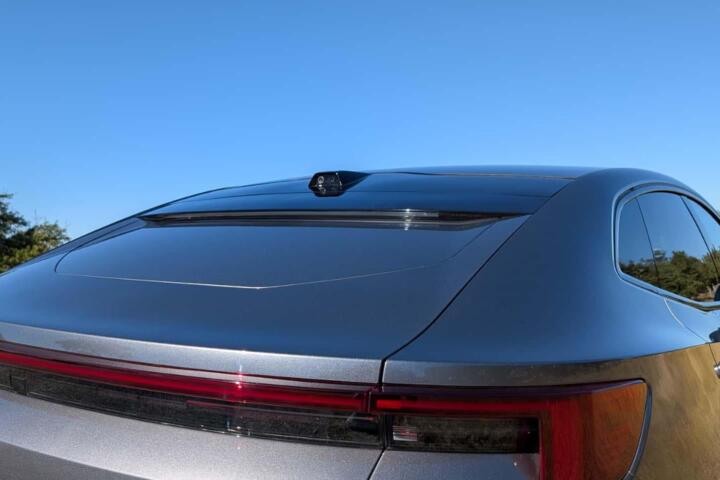
The most frequent error is placing the camera lens too low on the vehicle body. Low-mounted cameras are prone to "road spray" and offer a distorted perspective that makes vehicles appear closer than they are. The camera should be roof-mounted, ideally integrated into a "shark fin" or aerodynamic spoiler, to provide a downward-looking perspective that mimics a natural human eye level.
Another mistake is neglecting the screen's brightness. A screen that is too dim during a sunny day is useless, while one that is too bright at night ruins the driver's night vision. Systems must use ambient light sensors to automatically adjust the display's nits—the same technology used in the latest Apple or Samsung smartphones—to ensure comfortable viewing in all lighting conditions.
Failing to provide a "reversionary mode" is also a critical oversight. Many high-end systems allow the digital mirror to "flip" back into a standard reflective mirror. While this doesn't help if there is no rear window, in cars that do have glass, it serves as a safety net. In windowless cars, the "reversionary" strategy should be a secondary camera feed or an augmented reality (AR) overlay on the dashboard.
FAQ
Is it legal to drive a car without a rear window?
Yes, provided the vehicle is equipped with side mirrors that offer a clear view of the road behind. In many jurisdictions, the addition of a high-definition digital rearview mirror satisfies or exceeds safety requirements for rearward visibility.
What happens if the camera gets covered in snow or mud?
Most modern systems, such as those found in premium electric SUVs, include a dedicated high-pressure washer jet for the camera lens. Additionally, hydrophobic coatings prevent most buildup from sticking while the vehicle is in motion.
Does the digital screen hurt your eyes during long drives?
Some drivers report a brief adjustment period. However, high-quality displays with high refresh rates (above 60Hz) and anti-glare coatings significantly reduce eye fatigue by mimicking the natural flicker-frequency of human sight.
Can the digital mirror be hacked or suffer from lag?
Automotive-grade hardware uses "hard-wired" LVDS (Low-Voltage Differential Signaling) connections rather than Wi-Fi or Bluetooth, making the feed virtually lag-free and extremely difficult to intercept or hack.
Does removing the window make the car hotter in the summer?
Actually, it can make it cooler. Traditional glass allows for significant "greenhouse effect" heat gain. Replacing glass with insulated body panels and high-tech roof materials (like electrochromic glass) allows for much better thermal management and reduced AC load.
Author’s Insight
Having tested various iterations of digital mirror technology—from the early prototypes in the Audi e-tron to the latest windowless performance coupes—I’ve noticed a clear trend: the "wow" factor fades quickly into pure utility. My advice to anyone skeptical of this shift is to focus on the "night and day" difference in rainy conditions. A physical window becomes a blurry mess in a storm, but a well-positioned camera with a digital screen remains perfectly clear. For me, the safety benefit of a wide-angle, unobstructed view far outweighs the nostalgic desire for a piece of glass.
Summary
The transition to a windowless rear design isn't just a stylistic gimmick; it is a calculated engineering move to enhance EV efficiency and cabin volume. By leveraging HDR sensors, active lens cleaning, and integrated ADAS warnings, manufacturers are creating a safer, more aerodynamically "slippery" vehicle. For the consumer, the key is ensuring the technology includes necessary redundancies and high-fidelity displays. As we move toward a future of autonomous and high-efficiency travel, the digital eye will inevitably prove more capable than the human one in the rearview. Drivers should embrace the shift, focusing on systems that prioritize high refresh rates and environmental resilience.