Automotive Safety Shift
For decades, vehicle safety was measured by the structural integrity of a chassis during a collision. Today, the focus has pivoted toward preventing the collision entirely through sophisticated software and sensor fusion. The 2026 standards represent a "Vision Zero" milestone, where the goal is to eliminate traffic fatalities through technological ubiquity.
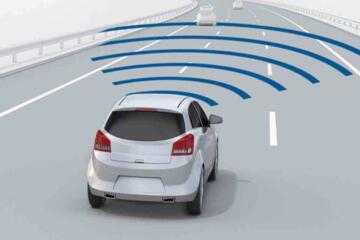
Consider the implementation of Autonomous Emergency Braking (AEB). While older versions focused on simple rear-end avoidance, the 2026 criteria require systems to function effectively in complex scenarios, such as turning across the path of an oncoming motorcycle or detecting a pedestrian in low-light, high-contrast urban environments.
According to preliminary data from the European Transport Safety Council (ETSC), active safety systems could reduce road deaths by up to 20% if adopted across all vehicle classes. However, achieving a five-star rating in 2026 requires more than just "having" these systems; it requires them to operate with near-human intuition and zero latency.
Active Safety Failures
The most significant issue in contemporary vehicle design is "feature bloat" without functional refinement. Many manufacturers install ADAS components to check a box, resulting in systems that are overly sensitive or prone to "ghost braking." When a system triggers unnecessarily, drivers often disable it, rendering the safety technology useless and increasing liability risks.
Another pain point is the lack of standardization in Driver Monitoring Systems (DMS). Inconsistent eye-tracking or gesture recognition leads to "automation complacency," where the driver trusts the system too much or becomes frustrated by false alerts. In a real-world scenario, a system that fails to distinguish between a driver checking their blind spot and a driver looking at a smartphone creates a dangerous "alert fatigue" loop.
Furthermore, the "edge case" problem remains a lethal gap. Current systems often struggle with atypical road users, such as electric scooters or children obscured by parked SUVs. Without the 2026 sensor fusion upgrades, these vehicles remain statistically more likely to be involved in preventable urban accidents, leading to lower safety scores and higher insurance premiums.
Strategic 2026 Solutions
To meet the rigorous 2026 thresholds, engineering teams must move beyond basic radar and camera setups. The integration of high-resolution LiDAR and thermal imaging is becoming a necessity for top-tier safety ratings.
Advanced Child Presence Detection (CPD)
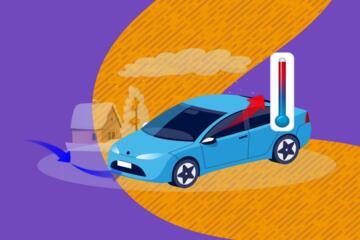
The new protocols mandate systems that can detect a child left in a locked vehicle under extreme temperatures. Unlike basic pressure sensors, the 2026 standard rewards the use of ultra-wideband (UWB) radar or interior sensing AI that monitors micro-movements, such as a breathing chest. Companies like Infineon and Vayyar are leading this space with 60GHz radar chips that provide sub-millimeter accuracy.
V2X (Vehicle-to-Everything) Integration
Safety is no longer an isolated vehicle function; it is a networked one. The 2026 criteria award points for V2X capabilities that allow cars to "talk" to smart infrastructure. For example, a vehicle can receive a signal from a smart traffic light that a pedestrian is about to enter a crosswalk before the car's own sensors can physically see them. Implementing Cohda Wireless or Commsignia stacks can reduce intersection accidents by nearly 15%.
Precision Driver State Monitoring
Standard DMS is being replaced by "Cognitive Load Monitoring." These systems use infrared cameras to track pupil dilation and blink frequency to determine if a driver is intoxicated, fatigued, or distracted. Using tools like Seeing Machines' Guardian technology ensures that the vehicle can take corrective action—such as pulling over safely—rather than just beeping at an unresponsive driver.
Enhanced VRU Protection for Two-Wheelers
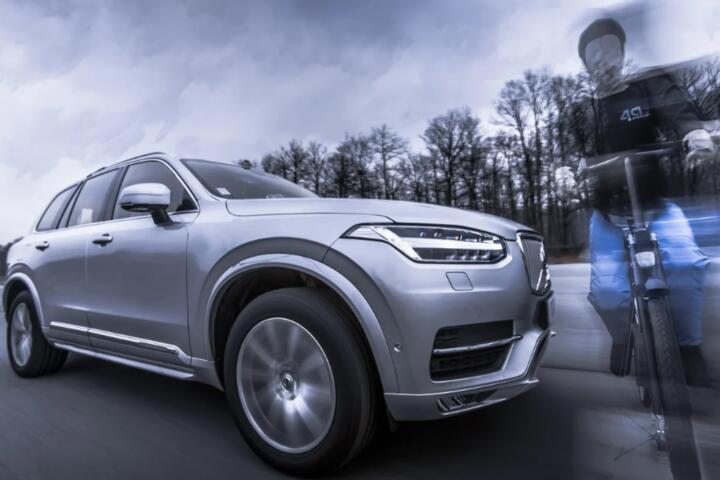
Motorcyclists and cyclists are the primary focus of the 2026 AEB updates. Systems must now pass tests involving "dooring" prevention (warning occupants not to open doors into cyclists) and intersection turn-across-path scenarios. Real-world testing shows that wide-angle camera lenses (120-degree FOV) combined with long-range radar are the only way to achieve the required 90% success rate in these maneuvers.
Adaptive Speed Support (ISA)
Intelligent Speed Assistance is now a core pillar. The 2026 requirements demand that ISA systems use a combination of GPS mapping and optical sign recognition. This prevents "camera-only" errors, such as reading a speed limit from a parallel service road. HERE Technologies provides the high-definition mapping data necessary to ensure 99% accuracy in speed limit adherence across diverse jurisdictions.
Implementation Cases
A mid-sized European SUV manufacturer recently overhauled its sensor suite to align with 2026 expectations. They replaced a single-camera system with a triple-lens configuration and added corner radars. The result was a 35% improvement in pedestrian detection during rainy, nighttime conditions. Their safety rating jumped from a projected four stars to a solid five, significantly boosting their market share in the safety-conscious Nordic markets.
In another instance, a commercial van fleet integrated aftermarket ADAS retrofits using Mobileye technology. By simulating the 2026 "near-miss" protocols, the fleet recorded a 50% reduction in low-speed urban collisions over twelve months. This transition saved the company approximately €1.2 million in insurance claims and vehicle downtime, proving that proactive safety is a financial asset.
2026 Compliance Checklist
| Feature Requirement | Technical Standard | Priority Level |
|---|---|---|
| Child Presence Detection | UWB Radar or Micro-vibration Sensors | Critical |
| AEB Pedestrian/Cyclist | Must function in low-light (< 10 lux) | High |
| V2V/V2X Communication | IEEE 802.11p or C-V2X (PC5) | Moderate |
| Driver Monitoring | Infrared (IR) eye-tracking / Distraction alerts | Critical |
| Speed Assistance | Fusion of Camera + HD Map Data | High |
| Lane Support | Emergency Lane Keeping (ELK) on unmarked roads | High |
Common Design Errors
The most frequent mistake is relying solely on camera-based systems for depth perception. While "Vision-only" approaches are cheaper, they often fail in fog or direct sunlight glare. Integrating redundant sensors like radar ensures the system remains robust when visibility is compromised.
Another error is "Over-Correction" in steering intervention. If an Emergency Lane Keeping (ELK) system is too aggressive, it can cause the driver to oversteer in the opposite direction. The 2026 standards require "smooth intervention" profiles. Engineers should use simulation tools like Ansys VRXPERIENCE to fine-tune the haptic feedback and steering torque to feel natural rather than intrusive.
Finally, failing to account for "System Latency" is a silent killer. Even a 200-millisecond delay in processing a sensor's data can mean the difference between a stop and a collision at 50 km/h. High-performance computing (HPC) platforms, such as NVIDIA DRIVE, are essential for processing the massive data throughput required by the 2026 active safety stack.
FAQ
What is the biggest change in the 2026 safety standards?
The shift toward "Child Presence Detection" and "Vulnerability Assessment" for motorcyclists represents the most significant expansion of the testing protocol.
Will my current vehicle be downgraded under 2026 rules?
Euro NCAP ratings are not retroactive. However, a five-star car from 2022 would likely only achieve a three-star rating if tested against 2026 criteria.
Is LiDAR mandatory for a 5-star rating in 2026?
It is not explicitly mandatory, but the performance requirements for night-time AEB make it extremely difficult to achieve top scores without LiDAR or high-end imaging radar.
How does V2X affect my safety score?
V2X contributes to the "Safety Assist" category, rewarding vehicles that can anticipate hazards beyond the line of sight of on-board sensors.
Does "Driver Monitoring" track my personal data?
The standards require the system to monitor for safety (fatigue/distraction), but data privacy regulations (GDPR) ensure that this data is processed locally and not stored or transmitted.
Author’s Insight
In my experience working with automotive Tier-1 suppliers, the 2026 standards are less about "safety" and more about "trust." We are moving toward a world where the car is a co-pilot. My advice to developers is to focus on the "human-machine interface" (HMI). A system that saves lives but annoys the driver will eventually be bypassed. The real winners in 2026 will be those who balance rigorous safety with a seamless, non-intrusive driving experience. Prioritize sensor fusion over raw hardware—it is the software intelligence that prevents the accident.
Summary
The 2026 safety requirements represent a sophisticated hurdle for the automotive industry, demanding a move toward interconnected and highly perceptive vehicle systems. By focusing on Child Presence Detection, V2X networking, and refined driver monitoring, manufacturers can meet these stringent goals. The path to a five-star rating now lies in the synergy between hardware redundancy and AI-driven decision-making. Stakeholders must act now to integrate these technologies, as the lead time for sensor validation and software calibration is substantial. Professional implementation of these standards will not only ensure compliance but will fundamentally redefine road safety for the next decade.