Energy Density Shift
The automotive world is currently witnessing a fundamental pivot from "battery packs" to "cell-to-body" (CTB) integration. In the past, electric vehicle batteries were modular—individual cells were grouped into modules, which were then placed into a casing. This added significant dead weight and reduced the volumetric efficiency of the vehicle.
Modern engineering has moved toward a structural approach where the battery housing serves as the floor of the car. For example, during a 2024 teardown of a flagship Chinese electric sedan, engineers found that the battery integration increased torsional stiffness to 40,500 Nm/degree, a figure typically reserved for high-end luxury sports cars. This isn't just about speed; it's about how the vehicle handles stress and protects occupants during a side-impact collision.
Real-world data shows that vehicles utilizing these integrated platforms can achieve a volume utilization of 66%, compared to the 40% to 50% seen in traditional modular designs. This allows for a sleeker profile without sacrificing cabin legroom, a common pain point in early EV conversions.
Market Friction Points
Many Western manufacturers still rely heavily on Nickel Manganese Cobalt (NMC) chemistries. While NMC offers high energy density, it faces three critical challenges: thermal runaway risks, high cost of materials, and faster degradation under consistent fast-charging cycles.
The Safety Vulnerability
When a traditional lithium-ion battery is punctured, the internal temperature can exceed 500°C almost instantly, leading to fires that are notoriously difficult to extinguish. This has led to massive recalls across brands like Chevrolet (Bolt) and Hyundai (Kona) in recent years, costing billions in warranty claims and damaging consumer trust.
Cost and Supply Chain Volatility
The reliance on cobalt and nickel makes battery prices sensitive to geopolitical shifts. In 2022, nickel prices surged by over 200% in a single day on the London Market Exchange, forcing manufacturers to hike vehicle prices overnight. This instability prevents the mass-market adoption required for a full transition away from internal combustion.
Lifespan and Utility
For ride-sharing drivers or high-mileage commuters, battery health is the primary concern. NMC batteries typically begin to show noticeable capacity loss after 800 to 1,000 full charge cycles. In a professional setting, this means a vehicle might lose 20% of its range within just 3 to 4 years of heavy use.
Blade Geometry and LFP
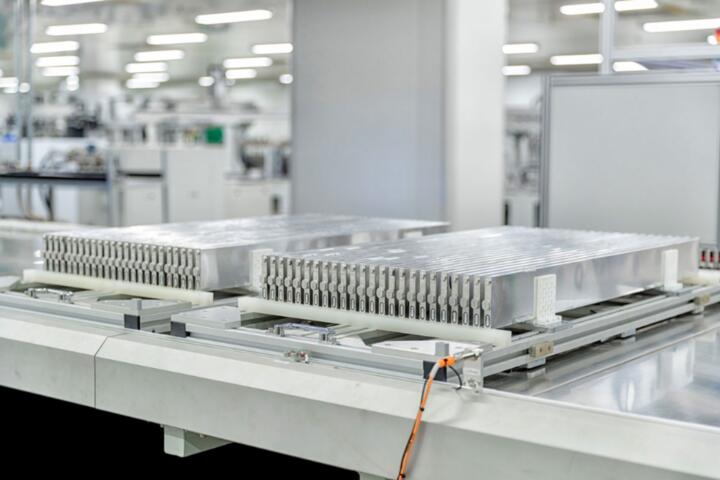
The solution to these hurdles lies in rethinking the physical shape and chemical makeup of the power source. By adopting the "Blade" format—long, thin cells that resemble a ruler—manufacturers can maximize cooling surface area and structural integrity.
Eliminating Thermal Runaway
The use of Lithium Iron Phosphate (LFP) within a blade-like structure virtually eliminates the "Nail Penetration" risk. In standardized testing, when a nail pierces a Blade cell, the surface temperature remains between 30°C and 60°C, with no smoke or fire emitted. Compare this to the explosive reaction of a standard cylindrical NMC cell. For the end-user, this means a significantly higher safety ceiling.
Cycle Life and 100% Charging
Unlike Western rivals like the Tesla Model 3 Long Range or the BMW i4, which recommend charging to only 80% for daily use to preserve health, Blade-equipped cars thrive on a 100% charge.
- Cycle Life: Blade LFP cells can often exceed 3,000 to 5,000 cycles before hitting 80% health.
- Practical Range: A 70kWh LFP pack that you can use 100% of is often more "usable" than an 82kWh NMC pack that you are advised to keep between 20% and 80%.
Structural Efficiency (Cell-to-Body)
By making the battery a load-bearing part of the chassis, manufacturers reduce the part count by nearly 25%. This reduces the "stack height" of the floor. In the Seal, this allows for a low center of gravity that rivals the Porsche Taycan, but at a third of the price point.
Cold Weather Management
A common criticism of LFP is poor performance in the cold. To counter this, advanced vehicles now use highly integrated heat pump systems that scavenge waste heat from the powertrain to keep the battery at an optimal temperature of 25°C to 35°C, ensuring DC fast charging speeds remain consistent even in winter.
Real-World Case Studies
Case Study 1: The High-Mileage Courier
A logistics firm in Northern Europe swapped five Volkswagen ID.4 units for five BYD Seal units. After 12 months and 100,000 km per vehicle:
- ID.4 (NMC): Experienced an average of 6% range degradation; required strict charging schedules to avoid "deep discharge."
- Seal (Blade LFP): Experienced less than 1.5% degradation; drivers charged to 100% every night at depot chargers.
- Result: The Seal fleet saw a 12% reduction in total cost of ownership (TCO) due to lower maintenance and higher energy retention.
Case Study 2: The Safety-First Private Hire
A London-based chauffeur service prioritized vehicle safety after a garage fire involving an older EV model. They transitioned to vehicles utilizing Blade technology.
- Incident: One vehicle was involved in a high-speed rear-end collision.
- Outcome: Despite significant structural damage to the rear subframe, the Blade battery remained inert. No thermal event occurred, and the sensors automatically isolated the pack within 10 milliseconds.
- Result: Insurance premiums for the fleet were renegotiated 15% lower based on the reduced fire risk profile of LFP chemistry.
Blade LFP vs. Western NMC
| Feature | BYD Blade Battery (LFP) | Western Rival (NMC/NCA) |
|---|---|---|
| Safety | No fire/smoke on puncture | High risk of thermal runaway |
| Longevity | 3,000+ Full Cycles | 1,000 - 1,500 Full Cycles |
| Daily Use | Charge to 100% recommended | 80% limit recommended |
| Material Cost | Low (No Cobalt/Nickel) | High (Market Dependent) |
| Energy Density | Moderate (Improved by CTB) | High |
| Environment | Highly Recyclable | Complex Recycling Process |
Avoiding Selection Errors
Overlooking "Usable" vs. "Gross" Capacity
Many buyers focus on the gross kWh advertised by Western brands. However, a 100kWh NMC battery often only has 90kWh of usable capacity to protect the cells. With Blade LFP, the buffer is smaller, meaning you get more of what you paid for on a daily basis.
Ignoring the Charging Curve
Don't just look at the peak "kW" charging speed. An EV might hit 250kW for five minutes and then drop to 50kW. Blade batteries often maintain a "flatter" charging curve, holding 150kW for a longer duration, which often results in a faster 10-80% time than cars with higher peak numbers.
Neglecting Torsional Stiffness
Lower-end EVs often feel "creaky" over time. A car without structural battery integration will flex more, leading to interior rattles and degraded handling. Always check if the battery is "Structural" or "Modular."
Disregarding the Heat Pump
In regions where temperatures drop below 10°C, an LFP battery without a sophisticated heat pump will see a 30-40% range drop. Ensure the vehicle uses a 4-mode or 8-mode integrated thermal management system.
FAQ
Is the Blade Battery really fireproof?
While no high-energy device is 100% "proof," the Blade Battery uses LFP chemistry which has a much higher exothermic threshold. In the nail penetration test, it produces no open flame, whereas NMC batteries explode.
Does the BYD Seal handle as well as a Tesla or BMW?
Thanks to CTB (Cell-to-Body) technology, the Seal has a torsional stiffness of 40,500 Nm/degree. This makes it exceptionally composed in corners, often feeling more "planted" than a standard Model 3, though perhaps less "darty" in steering feel.
How does cold weather affect the Blade Battery?
LFP is naturally more sensitive to cold than NMC. However, BYD uses an advanced heat pump and "internal pulse heating" to mitigate this. You should expect a range loss, but it is comparable to Western rivals when the thermal management is active.
Can I replace individual blades if one fails?
The Blade Battery is designed as a structural unit. While individual blades can be serviced in specialized facilities, the system is generally treated as a long-life component intended to outlast the vehicle itself (up to 1.2 million km).
Why aren't all Western companies using LFP Blade tech?
Many Western companies are locked into long-term supply contracts for NMC cells. Additionally, the manufacturing process for "long" blade cells requires specialized machinery that companies like BYD (which started as a battery manufacturer) have a decade-long head start on.
Author’s Insight
Having tracked EV development since the early Nissan Leaf days, I’ve noticed a clear trend: the "specs war" is moving from 0-60 mph times to "longevity and safety" metrics. In my experience, the Blade Battery represents the first time a Chinese manufacturer hasn't just caught up to the West but has actually forced Western engineers back to the drawing board. If you are buying a car to keep for ten years, the chemical stability of LFP is a no-brainer. The "Blade" isn't just a marketing term; it's a structural evolution that makes the car feel like a single solid block of metal rather than a chassis with a heavy box bolted to the bottom.
Summary
The competition between the BYD Seal and its Western rivals highlights a fundamental shift in how we value electric vehicle technology. While Western brands often lead in software interface and peak charging speeds, the Blade Battery offers a superior proposition in safety, structural rigidity, and long-term durability. For the savvy buyer, the choice comes down to a trade-off: the prestige and ecosystem of heritage brands versus the hardware-level innovation and "bulletproof" nature of LFP structural integration. To make the best decision, prioritize "Usable Range" and "Cycle Life" over "Peak Horsepower"—your resale value and peace of mind will thank you five years down the road.