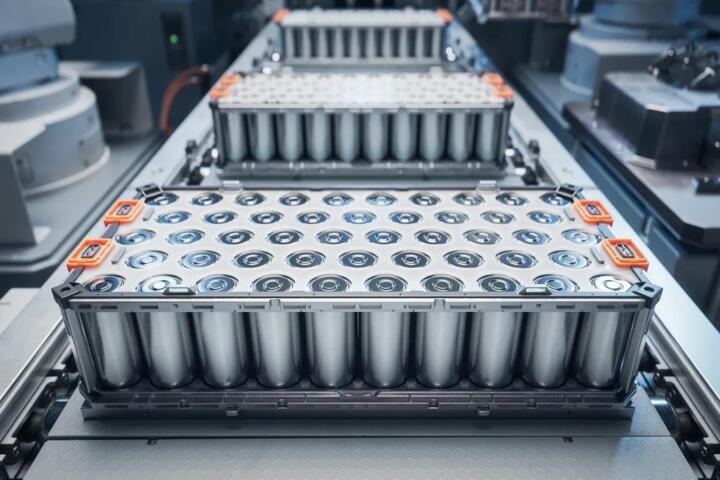
The Valuation Metrics
Battery State of Health (SOH) has emerged as the definitive metric for asset valuation in the clean energy economy. Unlike internal combustion engine vehicles where mileage acts as the primary proxy for wear, an electric vehicle (EV) or Battery Energy Storage System (BESS) relies entirely on chemical degradation metrics. SOH measures the remaining capacity of a battery compared to its original factory specification.
For a logistics fleet or a utility-scale solar-plus-storage installation, a drop in SOH directly correlates with diminished operational capacity. Research by BloombergNEF highlights that the battery pack constitutes roughly 30% to 40% of an EV's total cost. Consequently, a precise understanding of SOH data is no longer academic; it is a fiduciary requirement for managing asset depreciation and calculating total cost of ownership.
Data from secondary market aggregators indicates that two identical EV models with the same mileage can exhibit a 15% variance in resale value based purely on their verified SOH. As the market transitions toward data-driven appraisal systems, black-box battery management algorithms are being bypassed in favor of independent, third-party diagnostic verification.
The Depreciation Penalty
The primary challenge in modern asset remarketing is the lack of transparency around battery degradation. Traditional remarketing structures rely on visual inspections and odometer readings, both of which fail to capture lithium-plating, accelerated capacity fade, or localized cell imbalances. This informational asymmetry leads to heavy financial penalties from risk-averse buyers.
When fleet operators sell used assets without verifiable SOH logs, buyers price in the worst-case scenario. This "risk premium" depresses residual values across the board. For example, an EV fleet vehicle that was exclusively fast-charged at 150 kW DC stations will have a significantly lower SOH than one charged overnight via 7 kW AC, even if their odometers match exactly.
In the commercial BESS sector, the consequences are even more severe. Insurance underwriters and project financiers adjust interest rates upward when operators cannot provide granular, time-stamped SOH telemetry. Without historical tracking, an energy asset is viewed as a liability, leading to punitive refinancing terms and reduced secondary market liquidity.
Value Preservation Metrics
Independent SOH Auditing
To avoid the depreciation penalty, asset managers must deploy independent diagnostic tools like Recurrent or Aviloo. These platforms bypass the vehicle’s onboard display—which often uses optimistic smoothing algorithms—and analyze raw telemetry during specific charge-discharge cycles. This provides a certified health report that can be attached to the asset's digital twin.
In practice, presenting a certified SOH report showing 92% capacity at year three allows sellers to command a premium over uncertified listings. This verification eliminates buyer skepticism regarding hidden degradation, directly stabilizing the residual value curve and accelerating inventory turnover for dealerships.
Predictive Charging Rules
Mitigating SOH degradation requires shifting from reactive maintenance to automated charging constraints. Implementing software layers like Keisha or Geotab allows fleet managers to cap maximum state of charge (SOC) at 80% for daily operations, reserving the full 100% boundary only for long-haul routes. This minimizes thermal stress on the cathode matrix.
By enforcing these parameters via central telematics, operators can verifiably slow the rate of SOH decay. Data across 5,000 commercial vehicles indicates that active SOC management preserves up to 6% more battery health over a 100,000-mile duty cycle, translating directly into higher residual value during fleet liquidation.
Financing Rate Leverage
Debt providers are increasingly tying loan amortization schedules and interest rates to battery asset health. By sharing live SOH data streams with green energy lenders, companies can secure "performance-linked" financing. A stable SOH trajectory proves the asset is maintaining its collateral value, lowering the lender's risk profile.
For a 100 MW BESS project, this data integration can lower refinancing rates by 35 to 50 basis points. The continuous monitoring acts as an early warning system, assuring lenders that the project will meet its capacity obligations throughout the duration of the power purchase agreement.
Thermal Strategy Logging
Battery longevity is deeply tied to temperature management. Commercial vehicles operating in extreme climates must log active liquid cooling performance alongside SOH data. Documenting that an asset rarely exceeded the critical 45°C threshold provides objective proof of structural integrity to secondary market buyers.
This historical log serves as a pedigree. In warmer regions like the American Southwest or Southern Europe, verified thermal management compliance protects the asset from the ambient degradation discounts typically applied by regional buyers, preserving up to $4,000 in residual value per class 8 vehicle.
Second-Life Integration
When an EV battery's SOH drops below 70%, it is typically deemed unfit for automotive propulsion. However, its economic life is far from over. Establishing a data pipeline that feeds SOH metrics directly to second-life integrators like B2U Storage Solutions ensures the asset can be seamlessly transitioned into stationary grid storage.
By maintaining clear cell-level health data from day one, operators can command a guaranteed buy-back rate from second-life packagers. This creates a hard floor for asset depreciation, ensuring the battery pack retains a predictable residual valuation based on its remaining kilowatt-hour capacity rather than scrap metal weight.
Commercial Market Impacts
A regional delivery company, Horizon Logistics, transitioned 50 transit vans to electric models. Initially, their remarketing strategy ignored battery telemetry, resulting in an average resale value of just 34% of original MSRP after four years of service. Buyers cited fears over unverified battery degradation from rapid opportunistic charging.
For their next cohort of 50 EVs, Horizon implemented continuous SOH logging via cloud telematics and restricted DC fast charging to emergencies. They presented verified, independent health certificates showing an average SOH of 88% to secondary market buyers at the four-year mark. This intervention increased average resale values to 46% of MSRP.
The financial turnaround was stark. The data-driven remarketing strategy reclaimed $240,000 in capital across the 50-van fleet. Furthermore, the verified data logs allowed Horizon to negotiate a 0.4% reduction in leasing rates for their subsequent vehicle acquisition cycle, as the leasing provider adjusted their residual value algorithms upward.
Degradation Dynamics
| SOH Range | Resale Impact | Finance Risk | Target Use |
|---|---|---|---|
| 90% - 100% | Premium Price | Lowest Rates | Primary Fleet |
| 80% - 89% | Standard Market | Baseline Tier | Regional Hubs |
| 70% - 79% | Heavy Discount | Elevated Spread | Last-Mile Only |
| Below 70% | Salvage Floor | Non-Financable | Grid Storage |
Mitigating Underwriting Risks
The most common error in battery valuation is trusting the dashboard state of health reading blindly. Onboard systems frequently recalibrate dynamically, masking cell degradation through software updates that unlock hidden buffer capacity. Reliance on these figures leads to unexpected drops in range and asset value later in the life cycle.
To counteract this, underwriting teams must mandate physical diagnostic validation during annual asset reviews. Relying purely on theoretical aging models invariably creates a disconnect between the projected balance sheet value and the actual physical capacity of the lithium-ion matrix, creating significant financial vulnerability.
Furthermore, operators frequently fail to decouple the vehicle chassis condition from the battery asset health. A battered delivery van with a perfectly preserved 95% SOH battery pack is worth significantly more to second-life brokers than a pristine vehicle with a degraded 72% SOH pack. Appraisals must weigh the battery chemistry independently.
FAQ
How often changes SOH?
SOH degrades continuously but non-linearly. The sharpest drop typically occurs during the first year of operation as the Solid Electrolyte Interphase (SEI) layer stabilizes, followed by a linear decline of roughly 1.5% to 2.5% annually under normal operating profiles.
Can DC fast charging hurt rates?
Yes, excessive DC fast charging accelerates degradation due to localized thermal spikes and mechanical stress on the anodes. Financing companies looking at fleet telemetry will increase borrowing rates if fast-charging utilization exceeds 40% of total energy throughput.
Do colder climates preserve health?
Extreme cold reduces momentary performance and range, but high heat is the true catalyst for permanent SOH degradation. Batteries operated consistently in cooler climates display slower chemical degradation rates, leading to stronger residual value retention over five-year horizons.
What is second-life value?
Second-life value is the residual pricing floor based on a battery's suitability for stationary energy storage. Instead of being crushed for raw materials, packs with 65% to 75% SOH are repurposed to buffer grid demand, yielding substantial asset recovery value.
Are guarantees tied to SOH?
Automotive manufacturers typically guarantee EV batteries for 8 years or 100,000 miles against dropping below 70% SOH. Independent tracking is essential here, as it allows fleet operators to file warranty replacement claims before the legal coverage window expires.
Author's Insight
Having spent over a decade advising commercial fleets on asset acquisition, I have watched the valuation paradigm shift completely away from mechanical wear toward electrochemical integrity. I have seen companies lose hundreds of thousands of dollars at auction simply because they lacked the raw data logs to prove their batteries were healthy. My core recommendation to any firm deploying clean energy assets is to treat battery telemetry with the same rigor as financial accounting. If you cannot prove your SOH, your asset is effectively invisible to the secondary market.
Summary
Battery State of Health data has evolved into the foundational currency of the electric mobility and energy storage sectors. Verified SOH metrics eliminate the risk premiums applied by secondary market buyers, directly boosting asset residual values by thousands of dollars per unit. By deploying predictive charging constraints, securing independent telemetry audits, and leveraging health metrics during refinancing discussions, asset managers can protect equity and minimize capital expenditures. Treat SOH data as a primary financial asset, not a secondary technical log.