The Rise of 48V Tech
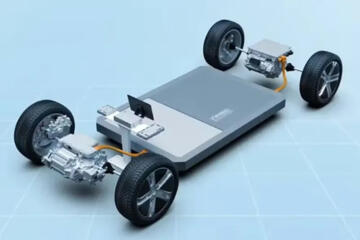
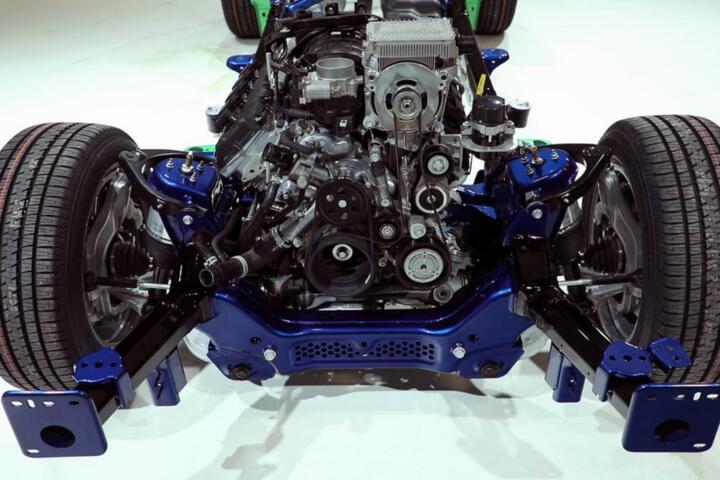
At its core, a 48V system is an enhanced electrical architecture that runs alongside the traditional 12V network. It typically consists of a lithium-ion battery, a DC/DC converter, and a belt-alternator starter (BAS) or an integrated starter-generator (ISG). While 12V systems struggle to provide more than 3kW of power, 48V setups comfortably deliver 10kW to 25kW. This leap in power allows for the electrification of high-load components that previously relied on mechanical energy from the engine.
Consider the Audi SQ7’s electric powered compressor (EPC). By utilizing a 48V supply, the turbocharger can spin to 70,000 RPM in less than 250 milliseconds, eliminating turbo lag entirely. This isn't just about speed; it’s about efficiency. According to data from Delphi Technologies, transitioning to 48V can reduce CO2 emissions by up to 15% in stop-and-go urban environments. It bridges the gap for consumers who aren't ready for a plug-in vehicle but demand premium performance and lower fuel costs.
Real-world implementation shows that 48V systems allow for "sailing" or "coasting" modes. When you lift your foot off the accelerator at highway speeds, the engine can shut down completely, with the 48V battery maintaining the power steering, air conditioning, and safety sensors. This was previously impossible with 12V systems, which would deplete in seconds under such loads.
Integration Challenges
Many manufacturers and Tier-1 suppliers initially treated 48V as a "bolt-on" solution rather than a holistic architectural shift. This led to significant thermal management issues. Because 48V batteries are often air-cooled to save costs, they can throttle performance during heavy regenerative braking cycles in hot climates. If the battery cannot accept the charge, the fuel-saving benefits vanish instantly, leaving the driver with a heavy, underperforming hybrid system.
The complexity of the DC/DC converter is another critical failure point. Engineers often underestimate the electromagnetic interference (EMI) generated when stepping down 48V to 12V to power legacy components like infotainment or interior lighting. Without proper shielding and high-quality capacitors from suppliers like Murata or TDK, these systems can cause "ghost" errors in the vehicle's CAN bus, leading to phantom sensor warnings and frustrated customers.
Furthermore, the "P-position" placement of the motor-generator (P0 through P4) is frequently optimized for manufacturing ease rather than maximum energy recovery. A P0 configuration (belt-driven) is cheap but limits the amount of torque that can be applied to the wheels and the amount of energy harvested. Failing to choose the right architecture for the vehicle's weight class results in a system that adds cost without providing the 10-15% efficiency gains promised to stakeholders.
Strategic Implementation
Optimizing Regenerative Braking
To maximize ROI, engineers must focus on the P2 or P3 positions where the electric motor is integrated into the transmission or on the axle. This allows the motor to decouple from the engine, capturing kinetic energy that would otherwise be lost as heat. Continental’s 48V High Power system demonstrates that moving to a 20kW-30kW motor in a P2 position can enable pure electric creeping in traffic jams, significantly reducing urban fuel consumption.
Advanced Thermal Management
Moving from air-cooling to liquid-cooling for the 48V inverter and battery pack is a non-negotiable step for high-performance applications. Companies like Bosch and Valeo have developed integrated modules where the cooling loop is shared with the ICE's low-temperature circuit. This ensures that the lithium-ion cells stay within their 15°C to 35°C "sweet spot," extending the life of the battery to the full 10-year vehicle lifecycle.
Active Suspension Systems
The 48V rail is a game-changer for chassis dynamics. The Bentley Bentayga and Mercedes-Benz GLE use 48V to power electromechanical active roll stabilization. Instead of slow hydraulic actuators, these systems use high-torque motors to counter body roll in milliseconds. This improves safety and comfort without the weight and maintenance penalties of complex hydraulic fluid systems.
Electric Supercharging Gains
Utilizing a 48V electric supercharger (e-charger) allows manufacturers to downsize engines without losing torque. A 2.0L 4-cylinder equipped with a 48V e-charger can match the low-end performance of a 3.0L V6. This downsizing strategy is the primary driver behind the latest powertrain refreshes from Jaguar Land Rover and Volvo, where high-voltage auxiliary power keeps the "fun to drive" factor alive.
Smart DC/DC Conversion
Instead of a single large converter, modern designs use bi-directional, multi-phase converters. This allows the 12V battery to "jump-start" the 48V system if it sits too long on a dealer lot, and vice versa. Using Gallium Nitride (GaN) transistors in these converters reduces heat loss by 30% and significantly shrinks the component footprint, making it easier to package in compact engine bays.
Performance Case Studies
A prominent German luxury manufacturer replaced their traditional 12V starter-alternator with a 48V ISG (Integrated Starter-Generator) in their flagship sedan. The problem was a noticeable "shudder" during the start-stop transition and lackluster fuel savings in real-world testing. By shifting the motor to a P2 position (between the engine and transmission) and updating the software to prioritize "torque fill" during gear shifts, they achieved a 12% increase in fuel economy and reduced the 0-60 mph time by 0.3 seconds due to the instant electric torque.
In another instance, a mass-market SUV manufacturer integrated a 48V belt-starter generator (P0) primarily for marketing purposes. Initial testing showed only a 3% efficiency gain because the belt was slipping during aggressive energy recovery. After switching to a high-tension, liquid-cooled BAS system and implementing predictive coasting—using GPS data to shut off the engine before downhill stretches—they hit a validated 9% CO2 reduction, meeting their fleet-wide emission targets for the fiscal year.
Architecture Comparison
| Feature | Standard 12V System | 48V Mild Hybrid | Full Hybrid (HEV) |
|---|---|---|---|
| Typical Power Output | 2kW - 3kW | 10kW - 25kW | 60kW - 100kW |
| Fuel Savings (Urban) | 0% - 3% | 8% - 15% | 20% - 30% |
| System Voltage Safety | Safe (No special PPE) | Safe (Below 60V DC) | High Risk (Orange Cables) |
| Cost to Manufacturer | Baseline | +$500 - $1,200 | +$3,000 - $5,000 |
| Electric-Only Driving | No | Limited (Creeping/Parking) | Yes (Up to 2-5 miles) |
Common Integration Errors
One of the most frequent mistakes is using undersized wiring for the 48V bus. While 48V allows for thinner wires than a 12V system for the same power, engineers often push the limits too far to save weight, leading to resistive heating and voltage drops. Always calculate for peak transient loads, not just steady-state operation. Using high-quality connectors with vibration-locking mechanisms is essential, as 48V systems are more prone to arcing if a connection becomes loose compared to 12V.
Another error is neglecting the software calibration for "Energy Management." A 48V system is only as good as the algorithm that decides when to charge and when to deploy energy. Failing to integrate navigation data (e.g., knowing a red light or a steep hill is 500 meters away) results in the battery being full when it should be empty, or empty when the driver needs a boost. Real-world testing shows that "Connected 48V" systems outperform "Blind" systems by nearly 20% in energy efficiency.
FAQ
Is a 48V system considered a "real" hybrid?
Technically, it is a "Mild Hybrid" (MHEV). Unlike a full hybrid (HEV) or plug-in hybrid (PHEV), it cannot typically power the car at highway speeds using electricity alone. Its primary job is to assist the engine and power high-load accessories.
Does a 48V battery need to be replaced?
These batteries are designed to last the life of the vehicle, typically 10 to 15 years. They use advanced Lithium-ion chemistry (often Lithium Nickel Manganese Cobalt or LTO) that handles thousands of shallow charge/discharge cycles better than a standard lead-acid battery.
Can I jump-start a 48V vehicle?
Yes, but you usually do it via the 12V terminals under the hood. The DC/DC converter then steps that power up to charge the 48V battery. Never attempt to jump-start the 48V battery directly with a 12V source.
Why not just go straight to 400V or 800V?
Cost and safety. Systems above 60V DC require expensive orange-shielded cabling, specialized technician training, and heavy-duty safety interlocks. 48V stays below the "high voltage" threshold, keeping production costs low.
Does it help with air conditioning?
Absolutely. A 48V electric A/C compressor can run at full blast even when the engine is off at a stoplight. This keeps the cabin cool without the engine needing to idle, which is a major comfort advantage in hot climates.
Author’s Insight
In my years of evaluating powertrain transitions, I’ve seen many "stop-gap" technologies come and go, but 48V electrification is different. It is the most pragmatic solution we have to extend the life of internal combustion while providing the luxury features consumers now expect. My advice to fleet managers and engineers is to stop viewing 48V as a fuel-economy play and start seeing it as a performance and reliability platform. The ability to decouple the engine from the accessories is the single greatest leap in ICE refinement since the advent of electronic fuel injection.
Summary
The shift to 48V mild hybrid systems represents a necessary evolution for an industry caught between the internal combustion past and the fully electric future. By providing enough power to electrify turbochargers, steering racks, and suspension systems, 48V architecture offers a significant boost in both efficiency and performance without the prohibitive costs of full electrification. For automakers, doubling down on 48V isn't just about meeting regulations; it's about delivering a superior, more responsive driving experience. To succeed, focus on high-efficiency P2/P3 motor placements, invest in liquid-cooled thermal management, and ensure that software logic is predictive rather than reactive. The 12V era is ending; the 48V era is the new baseline for automotive excellence.